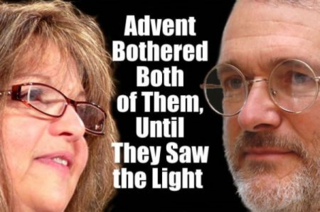
One Season, Two Views, By Dan Valenti and Theresa Bonopartis
DAN VALENTI:
I love the Advent season. It's a time of rest and reflection, a spiritual justification to bow out of the consumerist frenzy that defines Christmas for so many Americans and consider the true meaning of Dec. 25. It was not, however, always like this. In the early 1970s, when I struck out on my own to college, I lost my faith — at least I thought I did. For a time, I became the worst believer of all, that of a declared atheist.
Today, I understand it differently. I didn't reject God. I rejected the popular conception of God, as if He could be neatly reduced to a coherent, containable, package of human conception, human thought, and human language. I rejected anyone's attempt to speak with certainly about the "All in all."
But what about God's Word? Didn't we have the Bible? That didn't cut it with me. I was slaving, learning the craft of writing, filling notebooks with poems, stories, essays, and journal entries. I knew how words worked. If God had inspired the thoughts behind the words, then surely the words themselves — by nature limited and connotative — would screw it up.
But didn't Jesus, the Second Person of the Holy Trinity, come to us in the guise of an infant born to a virgin in a Bethlehem manger? Perhaps, yet I could find no hard, factual evidence to verify the claim. For years, therefore, I found the Advent season stripped of meaning. What were they but a series of cold days, each longer in night by a minute or two until Dec. 21? What were they but days of anger? I had long lost my belief in Santa, and now I found myself not believing in a God I could rationally understand. Pride ate me up.
Christmas became just another day. We exchanged gifts, shared a family meal, looked at colored lights on a decorated tree, and watched "A Christmas Carol" starring Alistair Sim, shown in black-and-white on TV. Jesus was nowhere. The Nativity story was a fairy tale. God was dead.
Except.
Except that I finally realized God was everywhere.
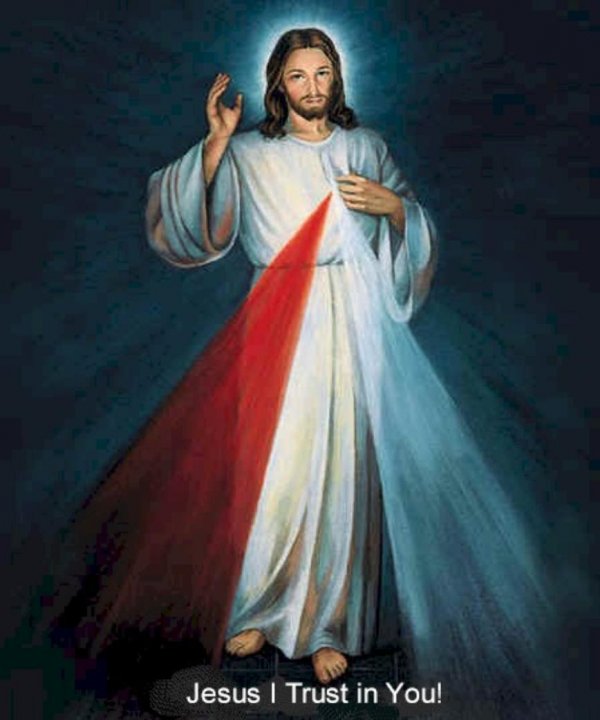
The way back was lit by the wonderful woman who became my wife, who told me of something called Divine Mercy, by fumbling and stumbling my way back into prayer again, and by realizing that employing human logic and "verifiable truth" as exclusive, absolute measures of God were illogical and false reasons for rejecting God. In objecting to what I dismissed as organized religion's pat conceptions of God, I had constructed an even more facile reason for declaring them nonsense. I had vast knowledge but knew nothing.
God had never abandoned me. He had simply hidden so I would seek Him harder, like going after someone who was good at playing hide-and-seek.
Today, Advent means something great and wonderful. It means waiting for the birth of Christ, who gives the season its name. It means the opportunity for forgiveness, redemption, a triumph over limited human nature, a victory of grace over sin, of life over death, and justified consolation in the midst of life's troubles and hurts.
Advent is a fresh start from God, who loves nothing better than to turn the pages of our past and write new words for us, now, in the moment. They are words of happiness, love, and joy.
THERESA BONOPARTIS:
I love the Advent season. It has become a real resting place, a "glorious expectation" of the coming of the Christ Child into our midst. But it was not always like this. Being a post-abortive woman, for years I found Advent and the Christmas season a time of great anxiety and sorrow. In the joy of the birth of Christ experienced by so many, I experienced nothing but fear, dread, and unending pain. I was always relieved to greet the New Year knowing I did not have to deal with it all again for another 12 months.
If you think about it, it's an understandable reaction. Feeling unforgivable and alienated from God, certain of eternal condemnation, why would anyone who was post-abortive want to "prepare the way" for Christ? Meeting Christ meant judgment and the flames of hell. It meant the fulfillment of everything I feared and felt about myself. The entire season spoke of my sinfulness.
The rest is here.
************
Are you living in darkness and depression after an abortion?
Unable to get past the pain of your loss?
There is Hope. There is Healing. There is a way out of the darkness.
Email us at lumina@postabortionhelp.org
Call us at 1-877-586-4621 or 1-718-881-8008

 Reclaiming Our Children: A Blog About Healing After Abortion
Leave a comment